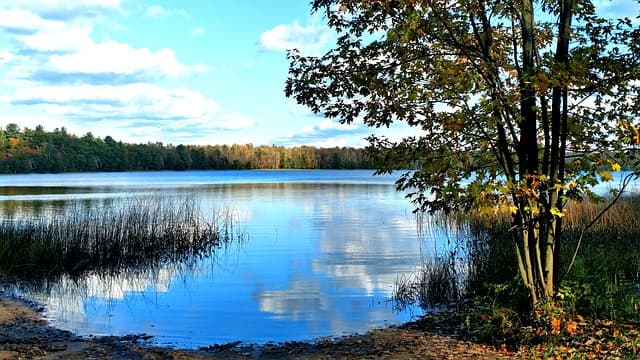
1. KEWEENAW PENINSULA. This rocky, forested finger jutting out into Lake Superior is not just remote and scenic, but one of the Midwest's most fascinating historical regions. A century ago its deep mines supplied most of the country's copper that electrified the nation. The copper boom that built ornate buildings in places like Houghton and Calumet is long gone, leaving scattered, crumbling industrial remnants of the massive facilities that mined and processed the metal. Still remaining are the spectacular vistas. The shoreline is fascinatingly varied. Along one stretch, sandy beaches. Other shores are littered with small smooth rocks of many colors. Huge boulders are splendid sights when Superior storms bringing big waves crash against them. On Keweenaw's eastern shore, red sandstone cliffs are common sights. The culture of Finns who migrated here to work in the mines is still prominent in the Keweenaw. Logging and the well-respected Michigan Tech anchor today's economy.
2. ISLE ROYALE. Over 40 miles off the U.P.'s shore, this wilderness island national park works its foggy magic on boaters, paddlers, backpackers who like its rugged ridges, anglers, divers, geology buffs, and all-around nature lovers. Herds of moose find the glacial landscape, with its many lakes and bays, ideal. The 1,000-lb moose, in turn, are the main diet of the island's wolves.
3. PORCUPINE MOUNTAINS & ONTONAGON. The Porkies' vast old-growth forests, beautiful waterfalls and vistas, 90 miles of hiking trails and ski slopes are major Midwestern destinations for backpackers and tourists alike. Nearby, faded mining boom towns, the harbor town of Ontonagon, and the underappreciated Trap Hills are all worth visits.
4. IRONWOOD & THE GOGEBIC RANGE. Boisterous years of iron mining and large-scale logging are long gone from the depopulated far western U.P. Today the economy is based largely on tourism, with four ski resorts, dramatic waterfalls, trout fishing, long Lake Gogebic and much of the Ottawa National Forest.
5. WATERSMEET & LAND O'LAKES. For a hundred years, anglers, paddlers, and vacationers have been drawn to this underdeveloped area's many lakes, streams, and small resorts. Highlights are the Cisco chain of lakes and rivers in the Ottawa National Forest, and especially the pristine lakes and unmarked trails of the Sylvania Wilderness Area. Bond Falls is a U.P. standout.
6. IRON RIVER & IRON MOUNTAIN AREAS. Wilderness has reasserted itself in this old iron-mining region, where wolves, eagles, homemade pasta, history museums, and scenic ski resorts now coexist. Unassuming Iron River, sprawling Iron Mountain, tidy Norway, and strikingly situated Crystal Falls with its eye-catching courthouse all have delightful surprises. Easy to miss as you pass Hermansville is the IXL 1900 office building, looking much, inside and out, as it did a century ago. IXL is the company which perfected tongue-and-groove flooring.
7. ESCANABA & MENOMINEE. The pleasant Green Bay shore is sometimes called the "banana belt" for its relatively moderate weather. This is the heart of U.P. dairy farming. The upper bay, Bay de Noc, is famous for walleye fishing. Migrating butterflies find an annual resting spot at rugged Peninsula Piont. Escanaba is a major U.P. shopping center, with good restaurants, a great waterfront park, and an interesting downtown. Menominee is a classic old lumber town along with Marinette across the river in Wisconsin. Both towns have striking historic architecture, harborfront parks and terrific urban walks.
8. MANISTIQUE & THE GARDEN PENINSULA. The isolated Nahma and Garden peninsulas are delightful getaways. Along the north shore is the haunting, surprisingly intact ghost town of Fayette, where charcoal kilns produced pig iron in the 1870s and 1880s. Visit enchanting Big Spring and peer into the deep, clear water where sometimes you'll see large trout far below. The Seul Choix lighthouse tower offers a panoramic view. Manistique, an old harbor and mill town, is the area's commercial center with pleasant shops.
9. THE MARQUETTE RANGE. The city of Marquette is the financial, medical, and governmental center of the U.P. It's also a shopping mecca, medical center, and a lively college town with 9,000 Northern Michigan U. students While Marquette has been the iron mining port, Ishpeming, Negaunee, and smaller towns in the region are actual iron mine locations.
|
10. PICTURED ROCKS, MUNISING, & AU TRAIN. The colorful cliffs, and hiking trails, waterfalls, and Lake Superior beaches of Pictured Rocks National Lakeshore make it one of the U.P.'s most visited locations. Divers use Munising as a base for exploring Munising Bay's many shipwrecks. Munising enjoys one of Michigan's most striking settings, ringed by forested hills, with Grand Island just beyond the harbor. West of Munising, Au Train is a resort hamlet of cottages with good fishing, a beautiful Lake Superior beach, and a warm inland lake.
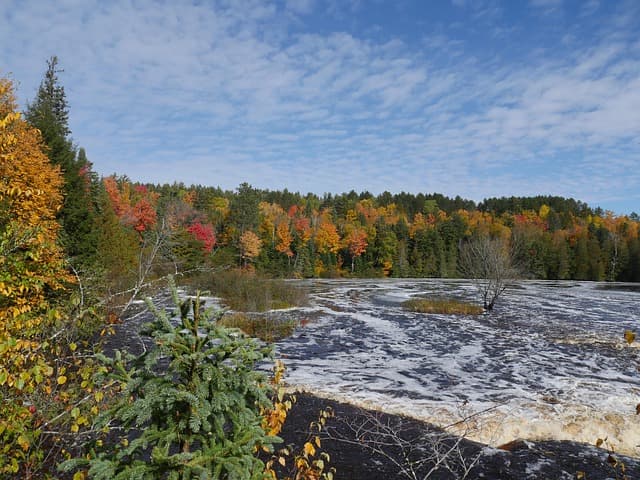
11. TAHQUAMENON & SENEY, GRAND MARAIS & WHITEFISH POINT. Several popular attractions draw visitors to this thinly settled part of the eastern U.P. south of Lake Superior. Inland, there's awesome, if crowded Tahquamenon Falls. Farther west are the extensive man-made marshes of the Seney National Wildlife Refuge, home of many kinds of birds. On Lake Superior lies the eastern end of scenic Pictured Rocks National Lakeshore near the charmingly simple village of Grand Marais. At Whitefish Point is a fine shipwreck museum and famous bird observation area. The quaint resort village of Curtis sits between two big fishing lakes. Newberry, the area's commercial center, comes alive with snowmobilers in winter. Its legendary logging days are remembered with a fine local museum.
12. SAULT STE. MARIE Giant freighters regularly pass through the Soo Locks here. A viewing stand draws thousands to see the behemoths up close as they pass between Lake Superior to Lake Huron via the St. Mary's River. The rapids here, long important to Native Americans for their huge whitefish runs, were first visited by Europeans in 1618. Sault Ste. Marie, Michigan, is the eastern U.P.'s commercial center and the U.P.'s second-largest town. Today its economic engine is the Sault Tribe with its giant casino. Manufacturing steel and paper propelled the town's Canadian neighbor across the St. Mary's River into a much bigger city, which features an outstanding bushplane museum, a sizable downtown, and the terminus of the Agawa Canyon Train (winter's Snow Train). The railroad takes visitors into the wild, rugged, roadless country to the north. Boat cruises and a tour train show the locks, rapids, and giant steel mill. The striking Point Iroquois lighthouse, three campgrounds, and a casino/golf resort are off the beautiful Whitefish Bay shore road.
13. LES CHENEAUX ISLANDS, DRUMMOND ISLAND & the ST. MARY'S RIVER Amid rocky limestone isles, marshes and northwoods forests, the U.P.'s far eastern end is an unhurried paradise for sailors, boaters, nature-lovers, and boatwatchers. In the 1890s the 36 islands of Les Cheneaux, protected from high winds and waves, attracted wealthy summer people escaping the summer heat of Midwestern cities. They still give the area a sedate ambiance, with picturesque wooden boats and boathouses. Boaters also love Drummond Island, another resort and retirement area, for its many inlets on Lake Huron and on and near the North Channel to Georgian Bay. The St. Mary's River, one of North America's most diverse fisheries, has some old-fashioned family resorts.
14. ST. IGNACE AND U.S. 2 to NAUBINWAY Just north and west of the spectacular bridge across the Straits of Mackinac, U. S. 2 jarringly greets travelers with colorful, kitschy tourist shops peddling "Indian" trinkets, smoked fish, & U.P. memorabilia. But in a few miles emerge long stretches of inviting sandy Lake Michigan beaches, and dunes, The cedars, pines, and hardwoods in the Hiawatha National Forest are sensuously dense. Several convenient waterfront campgrounds are near the bridge. Head east on U.S. 2 and you arrive in the historic town of St. Ignace, where ferries to Mackinac Island leave regularly. Unlike Mackinaw City south of the bridge, St. Ignace is not only a motel strip but a year-round community.
15. MACKINAC ISLAND This storied, auto-free island was once a Native American meeting place, later the fur-trading center for the enormous northwest. It is Michigan's top overnight destination for overnight trips. Visitors remember the carriage tours, bike rides around the island, the historic 18th-century fort, the famous Grand Hotel, and the ambiance of a bustling Victorian resort town where horses remain the chief means of transportation.
|